
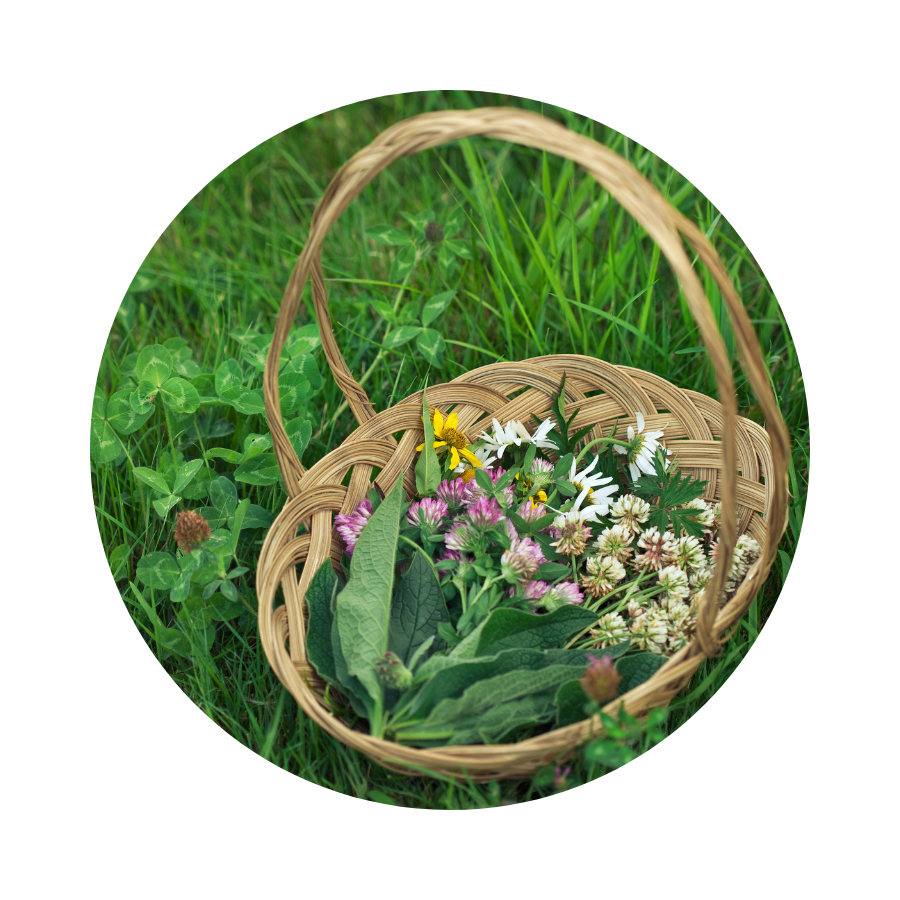
One of the most important things I’ve been learning in herbalism is that it’s not just about using the plants. It’s about how we come to them in the first place.
We live in a time where almost everything is fast, convenient, and disposable. It’s easy to order dried herbs online, have them show up at your door, and never think twice about where they came from. But something gets lost in that process.
Herbalism, at its heart, is about relationship.
It’s about remembering that these plants grew from the earth, in a living ecosystem, long before they ever made it into your cup. When we lose that connection, we also lose a piece of the respect and awareness that makes this practice so meaningful.
That’s why, when possible, I believe we should try to forage and source herbs ourselves. Even if it’s just a few plants here and there, it brings you back into relationship with the land. You begin to notice where plants grow, when they thrive, and how they exist within their environment. It changes everything.
With that said, foraging comes with responsibility.
Sustainable & Safe Foraging Practices
- Take the time to truly identify a plant before harvesting. When in doubt, leave it.
- Always ask permission before foraging, whether that’s from a landowner or simply taking a quiet moment to acknowledge the land and offer gratitude.
- Be mindful of where you’re harvesting. Avoid areas that may have been exposed to chemicals, road runoff, or pollution.
- Protect vulnerable plant populations. If a plant is at risk or endangered, it’s not ours to take. (You can check current at-risk species through organizations like United Plant Savers.)
- Harvest gently, without disrupting the surrounding habitat or damaging the plant’s ability to continue growing.
- Take only a small portion from any one area. A good rule I follow is no more than about 10%, then move on.
- Only gather what you can realistically use and process. More is not better here.
Sourcing herbs this way slows you down in the best possible way. It invites you to be present, to observe, and to participate instead of just consume.
What to Look for When Sourcing Herbs Online
If you’re not able to forage, sourcing your herbs online or through small suppliers can still be a beautiful and intentional option. The key is being mindful about who you’re buying from and how those herbs were grown and handled.
Here are a few things I personally look for:
- Organic or naturally grown herbs whenever possible, to avoid unnecessary chemicals
- Transparency from the supplier about where the herbs are sourced and how they’re grown or harvested
- Ethical and sustainable harvesting practices, especially for wildcrafted herbs
- Clear labeling, including the plant’s botanical name (not just the common name)
- Freshness and quality, like vibrant color and strong aroma rather than dull or faded plant material
- Small farms, local growers, or trusted herbal companies that prioritize the plants over mass production
- Minimal processing, meaning the herbs haven’t been overly altered, sprayed, or sitting for long periods
- Proper storage and packaging, helping preserve the plant’s potency and integrity
- A clear respect for the plants, which you can often feel through the way a company speaks about their sourcing and practices
It doesn’t have to be complicated, but it does require a little more intention. Over time, you start to recognize which sources feel aligned and which don’t.
And that, in itself, becomes part of your herbal practice.
At the end of the day, this is about respect. For the plants, for the land, and for the role they play in supporting us. The more we remember that, the more meaningful this work becomes.

 The Colorful Herbalist
Leave a comment