
Once you’ve taken the time to source your herbs, how you store them matters just as much.
Herbs are living in their own way, even after they’ve been harvested. The way we care for them determines how much of their goodness stays intact when we’re ready to use them.
As a general rule, all herbs, whether fresh or dried, do best in a cool, dark space. Light, heat, and air slowly break down their properties, so the goal is always to protect them as much as we can.
Working with Fresh Herbs
Fresh herbs can be a little more delicate, and how long they last depends on the part of the plant you’re using.
The softer, more fragile parts like leaves and flowers tend to wilt quickly. I try to use those within a couple of days, usually around 2 to 3, unless I’m drying them for later.
The more dense parts of the plant, like roots, bark, and berries, are much more forgiving. These can often be stored for a few weeks when kept in the right conditions.
You can store fresh herbs in the fridge or even freeze them, depending on your plans for use.
One thing I always keep in mind is balancing moisture and air. Fresh herbs need enough moisture to stay alive, but too much exposure to air will cause them to break down faster. Finding that middle ground makes all the difference.
And sometimes, certain plants simply don’t store well at all and will become toxic if not used right away. This is where learning each plant individually becomes so important.
Storing Dried Herbs
Dried herbs are much simpler to care for, which is part of why I love having a well-stocked herbal pantry.
The goal here is to keep them away from the three things that degrade them most: oxygen, light, and moisture.
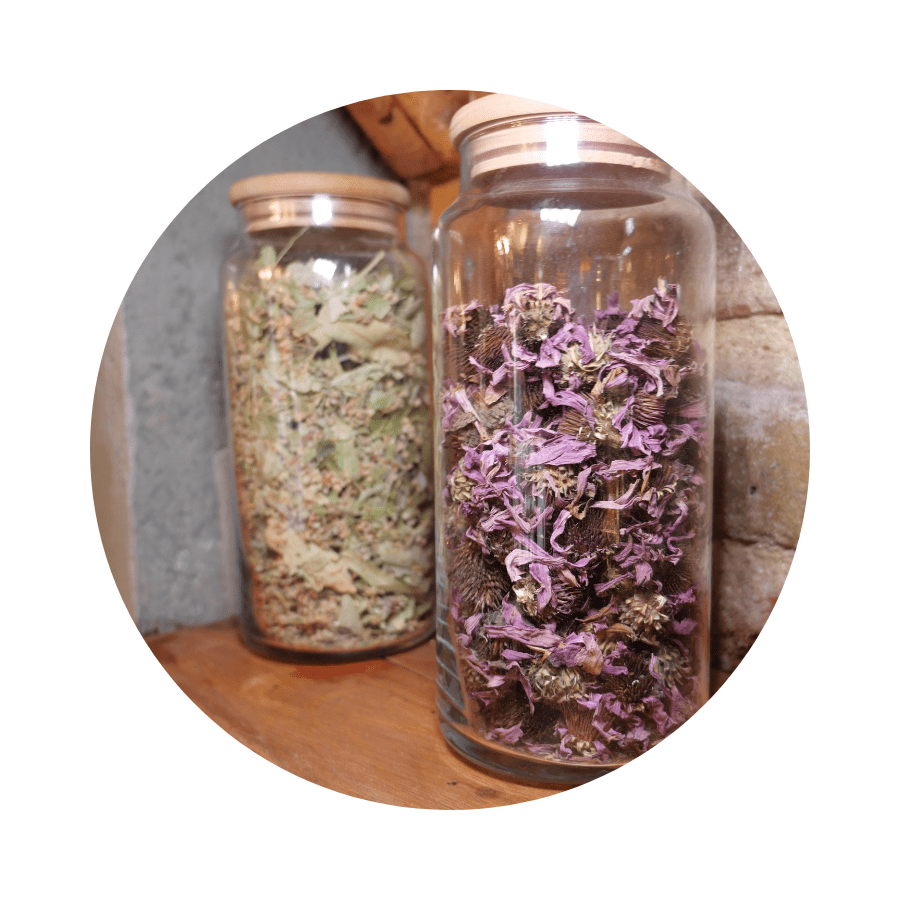
I like using airtight glass jars or well-sealed bags and storing them in cabinets, shelves, closets, or anywhere that stays relatively cool and dark. Even something like a tucked-away corner or under-bed storage can work if the environment is stable.
When stored properly, the more delicate parts like leaves and flowers will usually stay potent for about a year. The harder, denser parts like roots, bark, and berries can often hold their potency for closer to two years.
You can also store dried herbs in the fridge or freezer if that works better for your space.
At the end of the day, storing herbs isn’t complicated, but it is intentional. It’s about honoring the plant long after it’s been harvested, so that when you reach for it, it still has something meaningful to offer.

 The Colorful Herbalist
Leave a comment