

Primary Herbal Actions
Herbal actions are a way to group plants based on how they affect the body. These can also be broken down into more specific secondary actions for a deeper understanding of how an herb works. Below are key terms to become familiar with when learning herbal actions.
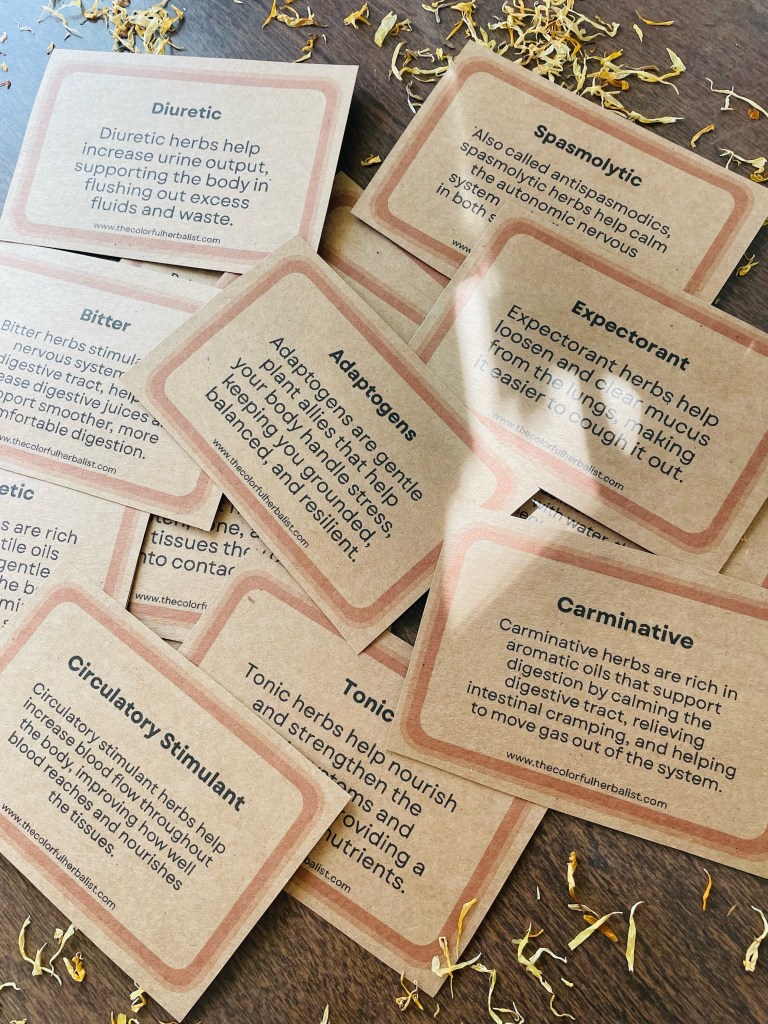
Adaptogens: Adaptogens are gentle plant allies that help your body handle stress, keeping you grounded, balanced, and resilient.
Alterative: Alterative herbs gently support and strengthen the body’s natural detox and nourishment systems, helping improve how nutrients are absorbed and how waste is eliminated through the liver, kidneys, colon, skin, and lungs.
Antimicrobial: Also known as antiseptics, antimicrobial herbs help the body fight off harmful microbes. They work broadly, supporting defense against bacteria, viruses, fungi, and other pathogens.
Astringent: Astringent herbs help tighten, tone, and firm the tissues they come into contact with.
Bitter: Bitter herbs stimulate the nervous system and digestive tract, helping increase digestive juices and support smoother, more comfortable digestion.
Carminative: Carminative herbs are rich in aromatic oils that support digestion by calming the digestive tract, relieving intestinal cramping, and helping to move gas out of the system.
Circulatory Stimulant: Circulatory stimulant herbs help increase blood flow throughout the body, improving how well blood reaches and nourishes the tissues.
Demulcent: Demulcent herbs help soothe, hydrate, and protect irritated mucous membranes. When mixed with water, they form a slippery, gel-like substance called mucilage that gently coats and comforts tissues.
Diaphoretic: Diaphoretic herbs are rich in aromatic volatile oils and encourage gentle sweating, helping the body release heat and eliminate waste through the skin.
Diuretic: Diuretic herbs help increase urine output, supporting the body in flushing out excess fluids and waste.
Emmenagogue: Emmenagogue herbs support the menstrual cycle by encouraging and helping regulate menstrual flow and supporting hormonal balance, often by assisting liver function.
Expectorant: Expectorant herbs help loosen and clear mucus from the lungs, making it easier to cough it out.
Galactagogue: Galactagogue herbs help support and increase breast milk production.
Nervine: Nervines are herbs that support and soothe the nervous system, helping to promote relaxation while also strengthening its overall function.
Rubefacient: Rubefacient herbs are applied to the skin to encourage circulation, drawing fresh blood to the area and helping relieve inflammation and congestion.
Spasmolytic: Also called antispasmodics, spasmolytic herbs help calm the autonomic nervous system and relieve spasms in both skeletal and smooth muscles.
Tonic: Tonic herbs help nourish and strengthen the body’s systems and tissues, often providing a rich source of nutrients.
As a beginner I found that the terms were a lot to remember at first. These Primary Herbal Action Vocabulary Cards are such a simple resource to help you learn the herbal language.
What Are Plant Energetics?
Plant energetics are the felt experience of an herb in your body.
Instead of focusing only on what an herb does on paper, energetics invite you to notice how it feels when you taste or take it, making herbalism more intuitive and personal.
When you taste an herb, you’re noticing three main qualities:
Temperature – warming or cooling sensations in the body
Some herbs create heat (like warmth in the belly or increased circulation), while others feel cooling or calming.
Moisture – moistening or drying effects
Some herbs feel hydrating or slightly slick, while others leave the mouth dry or tight.
Tone – tightening or relaxing of tissues
You may notice a puckering, astringent sensation or a softening, relaxing effect.
Over time, these simple observations help you understand how an herb is working. For example, warming and drying herbs may support sluggish digestion or excess mucus, while cooling and moistening herbs may help with dryness or irritation.
Plant energetics are less about memorizing and more about learning to listen—to the plant and to your body.
What Are Plant Characteristics?
Plant characteristics are the sensory qualities of an herb that help you experience it more deeply. While herbal actions explain what a plant does and energetics describe how it feels, characteristics are what you notice through your senses.
Flavor is one of the most important. Herbs may taste sweet, bitter, sour, spicy, or bland, offering subtle clues about how they interact with the body—especially digestion.
Aroma is the scent of the plant, created by its natural oils and closely tied to flavor. Scents are often described as citrusy, earthy, floral, minty, spicy, herby, or woodsy.
Color adds a visual layer to the experience, contributing to the beauty and enjoyment of herbal blends and teas.
Together, these qualities help you connect with plants in a more intuitive, sensory way. Herbalism deepens when we learn to slow down and notice—through action, sensation, and the senses. This is where real connection with plants begins. 🌿

 The Colorful Herbalist
Leave a comment