
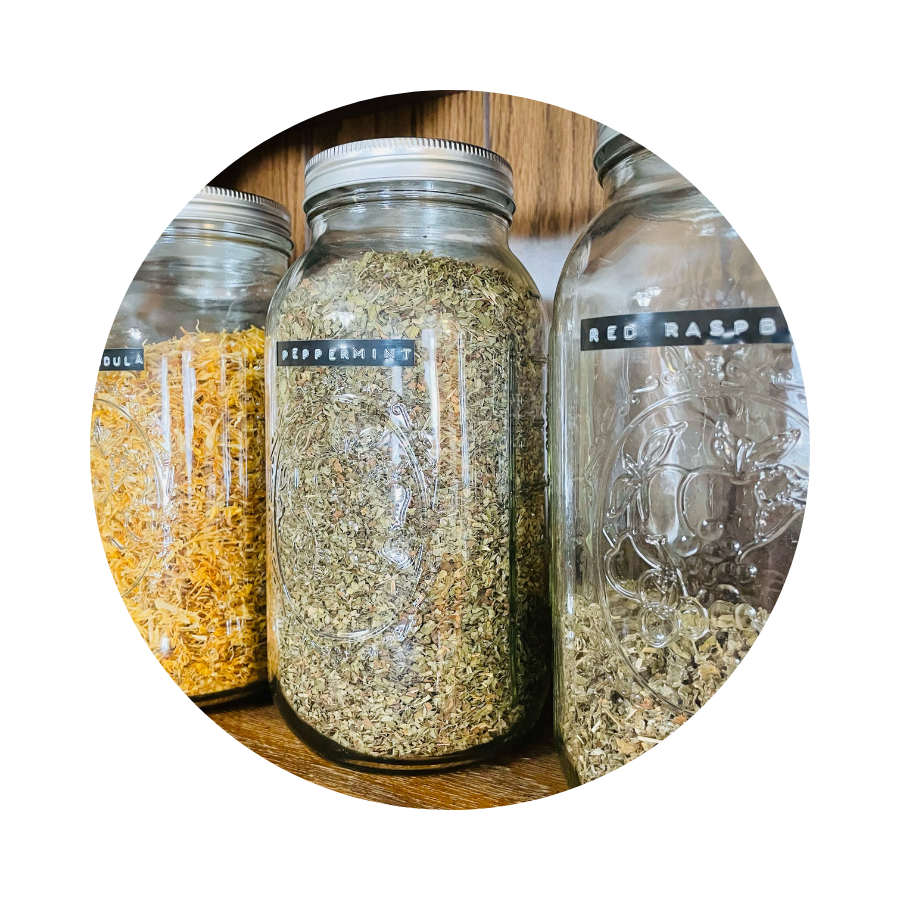
When you first start working with herbs, one of the biggest questions is, “How much do I actually use?”
The truth is, herbalism allows for flexibility, but having a few foundational guidelines can make everything feel a lot more approachable.
Herbal Proportions for Infusions & Decoctions
For most everyday teas made with dried herbs, a good starting point is about 1–2 tablespoons of plant material per 8 ounces of water. This creates a balanced cup that’s both enjoyable and supportive.
If you’re making a larger batch, like a quart-sized jar, you can adjust depending on how strong you want your infusion. A lighter blend might use around ¼ cup of dried herbs, while a more potent, nutrient-dense infusion may use closer to 1 ounce by weight.
When you’re working with tougher plant materials like roots, bark, or seeds, less is often needed. These are more concentrated and benefit from a smaller amount, usually around 1–2 teaspoons per cup, or a few tablespoons per quart.
If you’re using fresh herbs, you’ll want to increase the amount. Fresh plants contain a lot of water and take up more space, so it’s typical to double or even triple the amount compared to dried herbs.
Over time, you’ll find your rhythm with this. Some days call for something light and simple, and other days you may want something deeper and more nourishing.
Storing Infusions & Decoctions
Most of the time, I make tea by the cup or in a jar that I’ll drink throughout the day. But when you make larger amounts, proper storage becomes important.
Because these are water-based preparations, they can spoil if left out too long. I like to store any extra in the refrigerator to keep things fresh and safe.
Infusions are best used within about 24 hours. After that, they start to lose their freshness.
Decoctions tend to last a little longer and can usually be stored for up to 48 hours before it’s time to make a new batch.
This is one of those gentle reminders that herbalism is meant to be practiced regularly. Small, fresh preparations often feel the most supportive.
Reheating Your Tea
You can absolutely drink your infusions or decoctions cold, especially if that feels good for your body. But if you’re craving something warm, reheating is an option too.
I prefer to gently warm mine on the stove rather than using a microwave, just to keep the process a little more intentional.
One thing to keep in mind is that reheating can sometimes bring out bitterness in certain herbs. If that happens, you can soften the flavor by adding a touch of honey or blending in a more aromatic herb when warming it.
Like everything else in herbalism, this is something you’ll start to notice and adjust over time.
At the end of the day, these are just guidelines. Herbalism isn’t about perfection, it’s about practice. The more you work with your herbs, the more intuitive it all becomes and that’s when it really starts to feel like your own.

 The Colorful Herbalist
Leave a comment