
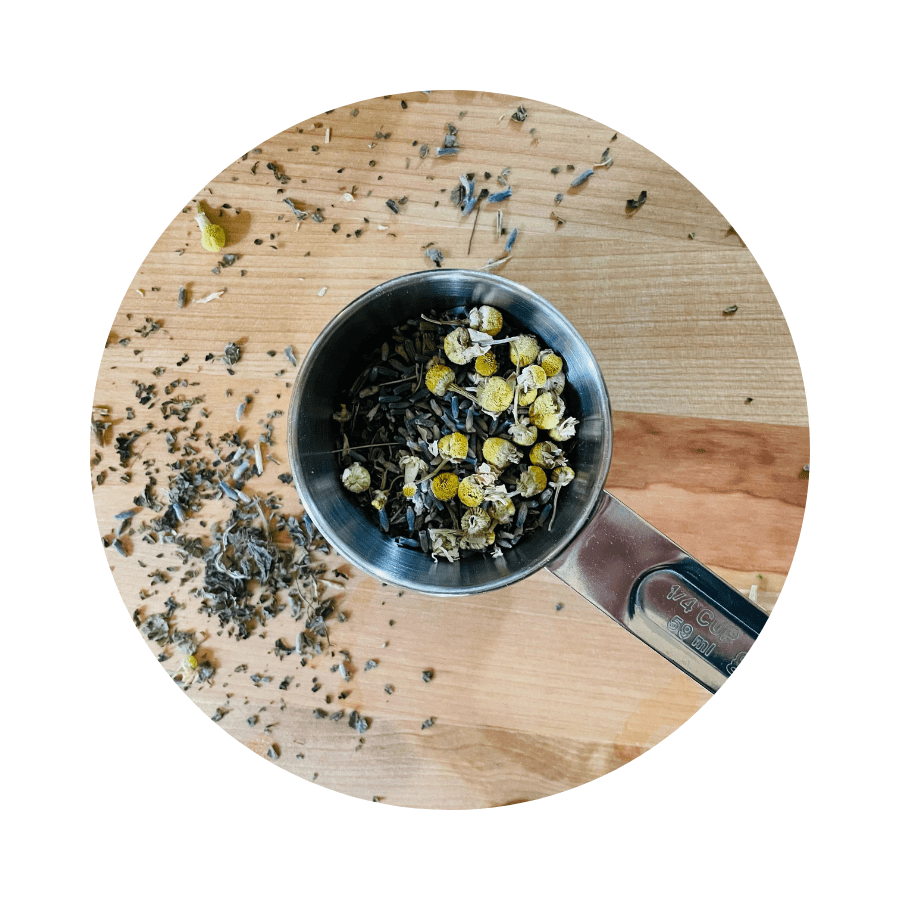
One of the things I’m currently learning in my herbal studies is that creating an herbal tea blend is about so much more than simply grabbing a handful of herbs that sound nice together.
There is intention behind every plant we choose.
As I work through my upcoming tea blending lesson, I found myself returning to one of the frameworks I’ve been studying: the ABCs formula. I’ll admit, when I first started learning about creating blends, this part felt a little intimidating. There are so many beautiful herbs, so many actions, and so many possibilities that it can feel overwhelming to know where to begin.
The ABCs formula has been helping me slow down and approach tea formulation with more purpose.
This framework, taught by herbalist Steven H. Home, is based around four categories: Activate, Build, Cleanse, and Support. The idea is not that every tea must contain every category, but rather that these categories help guide us as we choose herbs with a specific goal in mind.
Before creating a blend, the first step is always asking: Why am I making this tea?
A few questions I’ve been learning to ask myself:
- What do I want this tea blend to support?
- Am I creating something for a specific wellness goal?
- Is this blend meant for a certain season, time of day, or experience?
- What overall feeling or intention do I want this tea to bring?
Once we know our purpose, we can begin choosing herbs intentionally.
A: Activate
The activate category includes herbs that help encourage movement or activity within the body.
These herbs may have actions that stimulate certain processes, support circulation, encourage digestion, soothe tension, or help the body respond in a specific direction.
Depending on the herb, this category may include actions like carminatives, circulatory stimulants, nervines, astringents, spasmolytics, and vulneraries.
Think of activate herbs as the “spark” in a blend, the herbs that help get things moving.
B: Build
Building herbs are the nourishing foundation of a blend.
These are often herbs that are rich in nutrients, minerals, and supportive compounds that help strengthen and nourish the body over time.
This category may include adaptogens or herbs traditionally used as tonics for different body systems.
When I think about building herbs, I picture the plants that help create a strong foundation, the ones that bring nourishment and steady support.
C: Cleanse
Cleansing herbs are traditionally used to support the body’s natural pathways of elimination.
Our bodies already have systems designed to process and remove what we no longer need, and cleansing herbs are often chosen to support those processes.
These herbs may include plants with actions such as alterative, diuretic, diaphoretic, expectorant, or stimulant laxative properties.
The important thing to remember is that “cleanse” does not mean harsh or extreme. It is about gently supporting the body’s natural rhythms.
S: Support
Supporting herbs are exactly what they sound like, herbs that provide additional support and balance within a blend.
These may include herbs with nourishing, soothing, toning, or calming qualities.
Support herbs are often where we find those beautiful finishing touches that make a blend feel complete.
There Is No Perfect Blend
Something I’ve found interesting while learning this formula is that herbs don’t always fit perfectly into only one category, and I’m reassured that it’s completely normal.
Many plants overlap.
An herb may activate one system while also nourishing another. This is part of what makes herbalism so fascinating: plants are complex, and our blends can be too.
As I continue learning and preparing to create my own tea blend for this course, I’m practicing letting go of the pressure to create the “perfect” blend.
Instead, I’m learning to start with intention.
A cup of tea can be a small daily ritual, a moment of connection, and a way to work with plants thoughtfully.
And that’s what makes herbalism so beautiful.
It’s not just about the herbs themselves, but about the relationship we build with them.
I can’t wait to share the blend I create as I continue this journey.

 The Colorful Herbalist
Leave a comment