
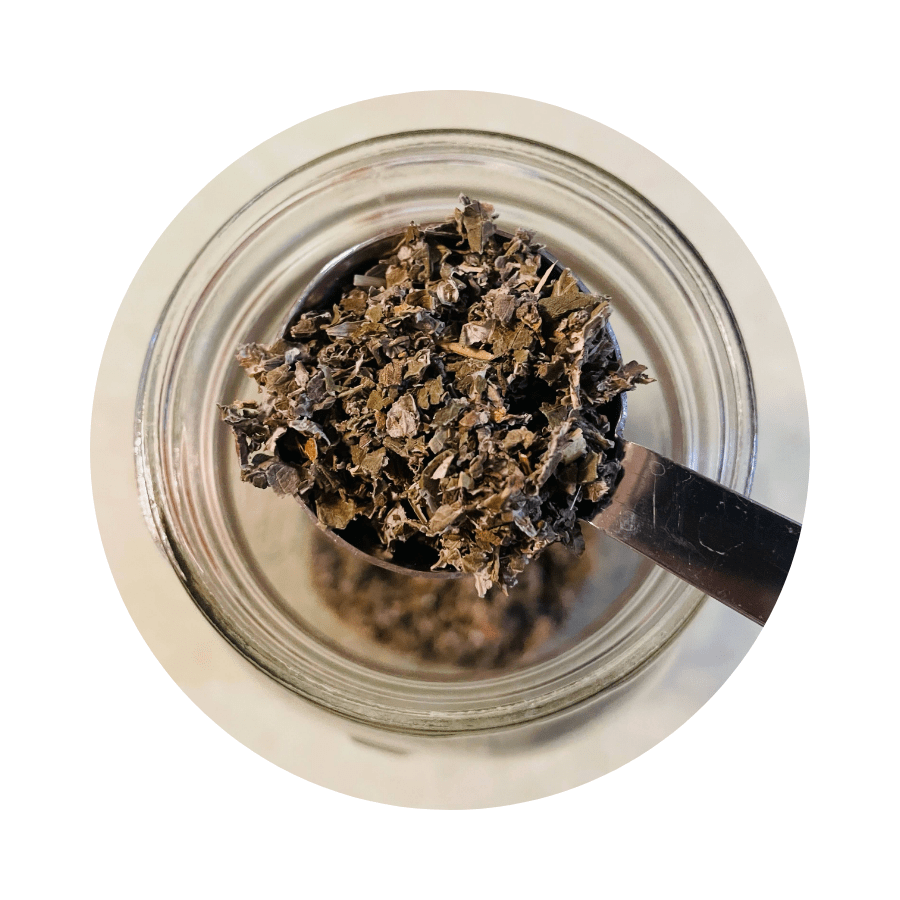
Red raspberry leaf is an herb I use consistently.
I drank it throughout pregnancy. I still drink it to support my cycles. It’s one of those plants that shows up quietly and does its job without a lot of hype.
There’s also a surprising amount of fear around it, especially during pregnancy.
Based on both study and experience, I’m comfortable saying this clearly: Red Raspberry leaf does not cause contractions.
What it does is tone and nourish the uterus, which we know is a muscle that works hard throughout a woman’s life and even harder during birth.
What It Actually Does
Red raspberry leaf is considered a uterine tonic.
That means it supports strength and tone over time. It doesn’t force the uterus in one direction. It helps it function well.
It’s traditionally used to:
- Ease menstrual cramping
- Support healthy, steady flow
- Encourage cycle regularity
- Nourish uterine tissue during pregnancy
It’s rich in minerals like calcium, iron, and potassium, along with supportive vitamins. Over time, that mineral density contributes to tissue strength and resilience.
When I Reach for It
I think of red raspberry leaf as a baseline herb for women.
- During the luteal phase when cramping tends to show up
- During pregnancy as daily uterine nourishment
- Postpartum as rebuilding support
- Anytime cycles feel weak, irregular, or draining
How I Use It
During pregnancy or when I want deeper nourishment, I make a long infusion:
1 ounce dried leaf
1 quart boiling water
Steep 4–8 hours, covered
Strain and sip throughout the day.
Children & Safety
Red raspberry leaf has a long history of gentle use, including with children for mild digestive upset or mineral support.
Important considerations:
- It does not cause contractions.
- Avoid if there’s a known allergy to raspberries or related plants.
- Because it contains tannins, extremely large amounts may feel drying, but normal use is typically well tolerated.
As always, individual context matters.
Why I Continue to Use It
Red raspberry leaf doesn’t override the body.
It strengthens what’s already there.
For me, it’s not just a pregnancy herb. It’s a lifelong uterine ally, practical, reliable, and worth keeping in regular rotation.

 The Colorful Herbalist
Leave a comment