
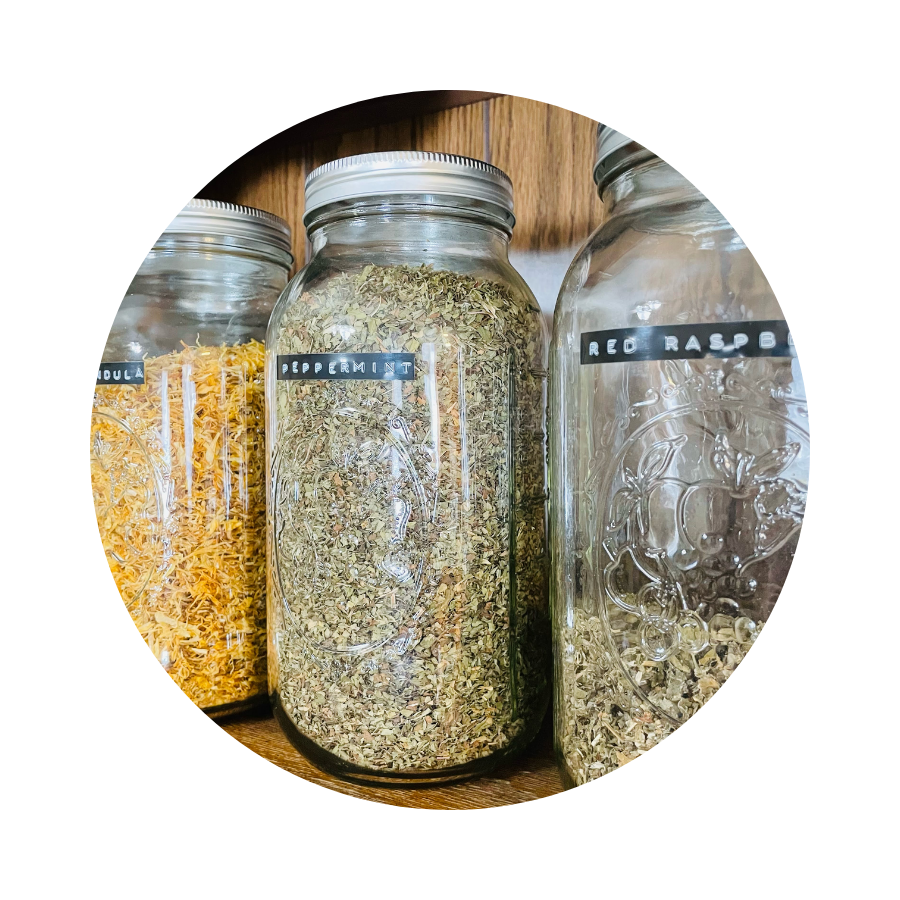
When I first started studying herbalism, I felt like I needed to know everything.
Every plant. Every action. Every contraindication.
But the more I learned, the more I realized something simple: most family herbalism lives in the basics.
Daily Nourishment and Foundational Support
Nettle Leaf
Nettle is one of the most nutrient-dense herbs I keep. Rich in iron, calcium, magnesium, potassium, and chlorophyll, it supports energy, skin and hair health, and overall vitality. It works slowly, rebuilding strength over time. In my home, I make a long, mineral-rich infusion, especially during stress, low energy, postpartum recovery, or allergy season, when consistent use helps calm reactivity. Nettle is safe for the whole family in appropriate amounts.
Raspberry Leaf
Traditionally a uterine tonic, raspberry leaf strengthens rather than stimulates, supporting long-term reproductive health. It eases mild cramping, encourages regular cycles, and offers mineral nourishment. I reach for it during my cycle, for teenage girls learning their rhythm, or as a gentle daily tea. Its steady support makes it a foundational women’s herb and safe for family use.
Dandelion Root
Dandelion root supports digestion and liver function, helping the body process waste efficiently. Its bitter compounds gently stimulate digestion while nourishing the liver. I use it after heavy meals, periods of rich foods, travel, or low activity. Prepared as a roasted root infusion, it’s grounding and supportive. Small amounts can be helpful for mild digestive upset in children.
Turmeric Root
Turmeric supports a healthy inflammatory response and long-term tissue resilience. Its benefits build gradually, making it ideal for joint and connective tissue support, post-activity soreness, or overall wellness. I add turmeric to warm milk, soups, or teas. Used thoughtfully, it’s family-friendly and a preventative ally for tissue and joint health.
Nervous System and Emotional Support
Chamomile
Chamomile calms the nervous system, soothes digestion, and supports restful sleep. I brew it at bedtime, for little ones with tummy aches, or on emotionally heavy days. Gentle and reliable, it is safe for children and a comforting, everyday ally.
Lemon Balm
Lemon balm eases nervous tension, supports mood, and helps with stress-related digestive discomfort. I reach for it during anxious seasons or restless nights. Its calming but uplifting qualities make it family-friendly and a soothing part of daily routines.
Lavender
Lavender supports tension, headaches, irritability, and sleep. I use it in tea, baths, or inhaled for overstimulated evenings. It offers steady nervous system support and is safe for children when used thoughtfully.
Seasonal and Acute Support
Elderberry
Elderberry supports the immune system during viral illness. I use it at the first signs of cold or flu, as syrup, tea, or infused preparations. Safe for children in appropriate doses, it’s a trusted seasonal ally.
Ginger Root
Ginger warms, stimulates circulation, and supports digestion. It helps with nausea, chills, and early signs of illness. I use it fresh or in warm infusions, providing gentle relief for adults and children alike.
Peppermint
Peppermint cools and moves, easing digestion, gas, and tension headaches. I use it after heavy meals, for upset stomachs, or when headaches feel hot and tight. Its familiar flavor makes it family-friendly and ideal for quick, noticeable support.
Why These Ten
These herbs cover most of what comes up in family life: digestion, nervous system balance, immune support, foundational nourishment, and women’s health. They are generally safe for family use when used thoughtfully. No herb works for everyone in every situation, but these are the plants I feel confident learning deeply before expanding further.

 The Colorful Herbalist
Leave a comment