
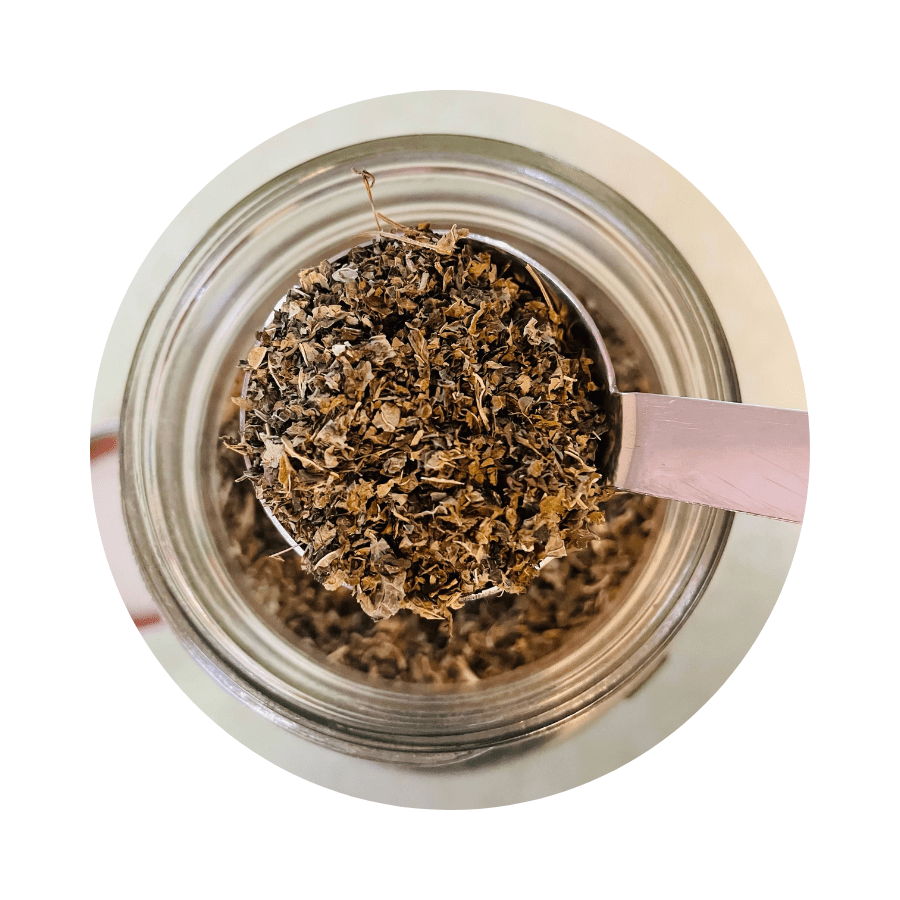
Lemon balm is one of those herbs that quietly earns a place in daily life.
I use it regularly for myself and my family. It isn’t flashy. It doesn’t force anything. It just works.
Melissa officinalis helps calm the nervous system, support digestion, and gently lift mood. It’s steady and reliable, the kind of herb you can use day after day without worry.
What It Actually Does
Lemon balm supports:
- Nervous system regulation
- Emotional balance, especially around stress or hormonal shifts
- Mild digestive discomfort or bloating
- Sleep and rest
It contains volatile oils and plant compounds that contribute to calming, antispasmodic, and mild antiviral effects. On top of that, it provides small amounts of vitamins and minerals, making it mildly nourishing.
When I Reach for It
I use lemon balm when:
- Someone feels anxious or wound up
- Digestion is off due to stress
- Sleep is restless
- Mild headaches or tension appear
It’s a gentle, consistent way to support the nervous system and mood without forcing change.
It also works well for children in small doses, for restlessness, mild fevers, nervousness, or digestive upset.
How I Use It
Tea / Infusion (daily support):
1 tablespoon dried (or 2 tablespoons fresh) lemon balm
2 cups hot water
Cover and steep 10–15 minutes
Drink warm or chilled, 1–2 cups per day
Tincture:
Useful for quick anxiety support or short-term nervous system relief.
Topical:
- Cold sores: lemon balm lotion or infused oil
- Cuts or stings: fresh juice or salve
- Nerve discomfort: infused compress
Blends I commonly make:
Stress Relief Tea: lemon balm + chamomile
Allergy Support Tea: lemon balm + nettle
Both are simple infusions, steeped covered, and consumed warm or chilled.
Safety
Lemon balm is generally safe for adults and children when used in reasonable amounts. Avoid if you have known allergies to plants in the mint family.

 The Colorful Herbalist
Leave a comment