
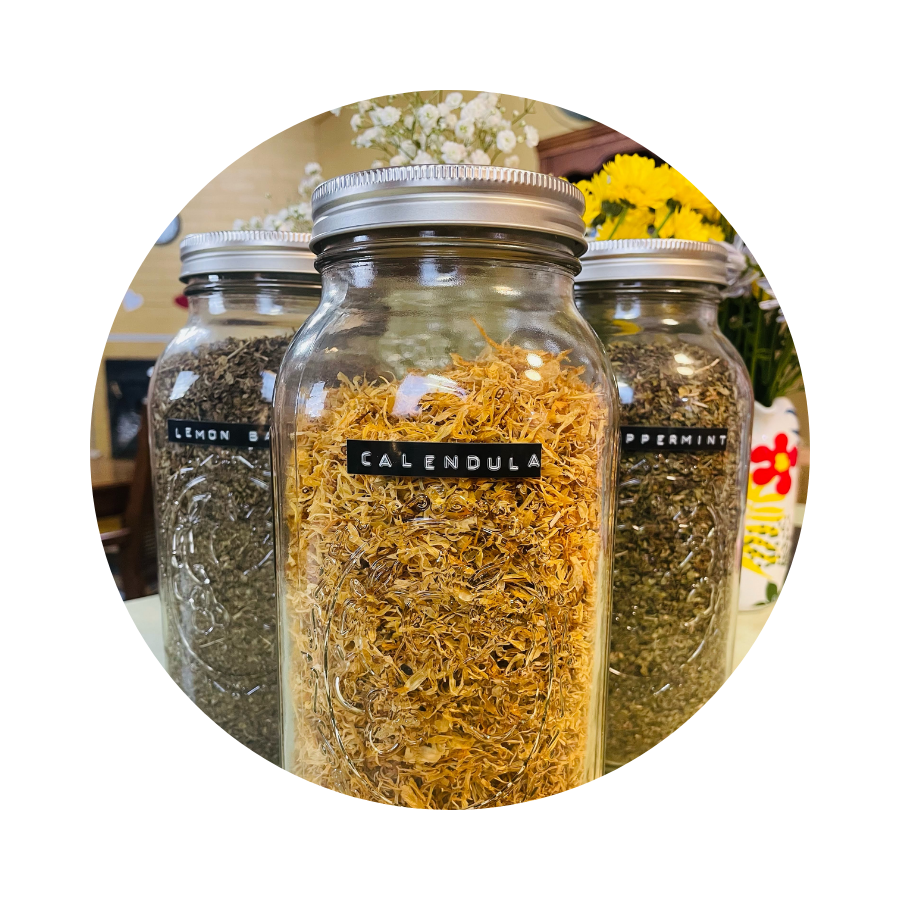
An herbalist is someone who works with plants to support everyday wellness. Herbalism is an age-old practice rooted in curiosity, care, and a relationship with the plants around us, the rhythms of our bodies, and the natural cycles of life.
There is no single path to becoming an herbalist. Some learn through self-study, others through mentorship, formal classes, or life experience.
What matters most is knowledge, responsibility, and deep respect for the plants and the people they serve.
What Does an Herbalist Do?
Herbalists spend time getting to know plants, learning about their properties and how they interact with the body. They prepare teas, tinctures, oils, and salves to support wellness and everyday balance. Herbalists also share what they know, encouraging self-care, curiosity, and connection with nature. Herbalism focuses on nourishment and support, not diagnosis or medical treatment.
Things an herbalist might do include:
- Studying and identifying plants within nature
- Learning how herbs support the body
- Preparing remedies such as teas, tinctures, oils, salves, and more
- Supporting wellness rather than treating disease
- Educating and empowering others to care for themselves
Types of Herbalists
These titles describe how someone practices rather than any legal credential.
Herbalist: A general term for anyone who studies or practices herbalism.
Family Herbalist: Focuses on the care of their own household. This often includes children, caregivers, and everyday family needs such as immune support, digestion, skin care, and overall health.
Community Herbalist: Serves people beyond their own family. This can include teaching classes, running workshops, making remedies for others, or sharing knowledge through an apothecary. Community herbalism centers on education and accessibility.
Clinical Herbalist: Works one-on-one with clients to create personalized herbal support plans. Clinical herbalists often have advanced training and focus on supporting the body’s systems and overall wellness. They do not diagnose or treat disease unless they also hold a medical license. Many choose to join the American Herbalists Guild for credibility, guidance, and community.
How Are Herbalists Regulated?
Herbalism in the United States exists outside of the medical system. Herbalists are not licensed medical providers. The practice is guided by education, tradition, and personal responsibility rather than state regulation.
Herbalists are generally protected under freedom of speech, educational rights, and dietary supplement laws. This allows them to teach, share historical and traditional uses of plants, and offer general wellness guidance.
Herbalists focus on supporting the body and empowering people to make informed choices about their own health.
Who I Am and How I Practice
I identify as both a family and community herbalist with a focus on women’s health, children, and family wellness. My work is gentle and rooted in tradition with a deep respect for the body’s natural rhythms.
Education is at the heart of my practice. I believe in honoring cycles, seasons, and the body’s own wisdom, and in offering tools that support the body rather than override it.
I do not diagnose or treat illness, and I do not replace medical care. What I offer is knowledge, plant wisdom, and supportive practices that families can explore alongside their own healthcare choices.
Herbalism as a Living Tradition
Herbalism is not a title you earn or a destination you reach. It is a living tradition that grows through curiosity, study, experience, and relationship with plants and people.
Whether you are brewing tea in your kitchen, learning the plants in your backyard, or caring for your family in simple, intentional ways, you are participating in a tradition that has been carried forward for generations.
This connection, care, and attention is the heart of herbalism.

 The Colorful Herbalist
Leave a comment