
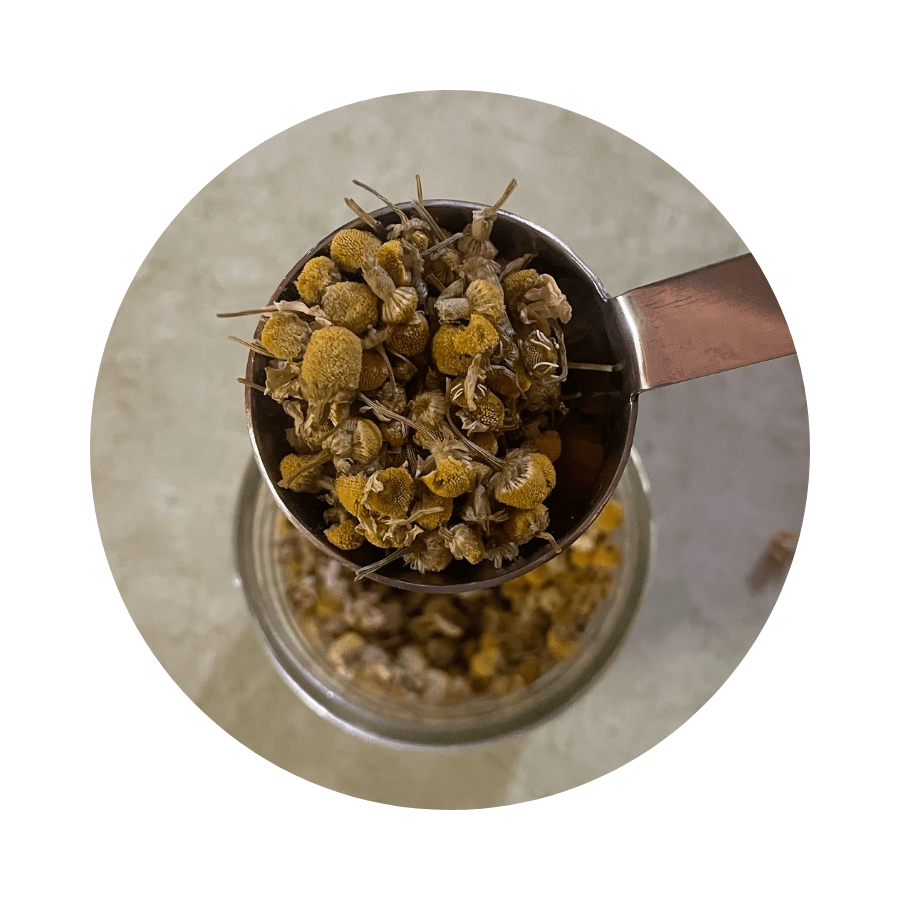
Chamomile is one of the few herbs most people already know.
Even if someone doesn’t consider themselves “into herbs,” they’ve probably had chamomile tea at some point. There’s a reason it’s lasted as long as it has.
It works.
Matricaria recutita is gentle, but that doesn’t mean weak. It consistently supports the nervous system and digestion in a way that feels steady and appropriate for everyday life.
What It Actually Does
Chamomile is best known for calming.
Not sedating. Not knocking you out.
Just taking the edge off.
It supports:
- Nervous tension
- Stress-related digestive discomfort
- Mild cramping
- Restlessness before sleep
Because stress and digestion are so closely connected, chamomile often helps both at the same time.
It contains compounds like apigenin and other plant constituents that contribute to its calming and anti-inflammatory effects, but in practice what most people notice is simple: their body softens.
When I Reach for It
In our house, chamomile is a staple.
I brew it when:
- Emotions are running high
- A child can’t settle before bed
- Someone has a nervous stomach
- The day has just been overstimulating
It’s especially helpful during the luteal phase or around menstruation when irritability and tension are more noticeable. It doesn’t override hormones, it just supports the body in settling.
How I Use It
Most often, I make a simple tea:
1–2 teaspoons dried flowers
1 cup hot water
Cover and steep 5–10 minutes
Covering it matters. The aromatic oils are part of what makes chamomile effective.
If I need stronger support, I’ll increase the amount slightly or extend the steep time. Just know it becomes more bitter as it strengthens.
I also use strong chamomile tea in baths or as a compress for irritated skin. It’s gentle enough for regular topical use.
Children & Safety
Chamomile has a long history of use with children when prepared mildly.
In small amounts, it’s commonly used for:
- Big emotions
- Mild digestive discomfort
- Restlessness
Avoid if there’s a known allergy to plants in the daisy (Asteraceae) family.
As with all herbs, moderation and attention matter.
Why It Stays in My Rotation
Chamomile isn’t dramatic.
It doesn’t feel intense.
It doesn’t promise big transformations.
Chamomile gently supports the nervous system, helping the body shift out of a stressed, overstimulated state and into a more regulated, restful one.

 The Colorful Herbalist
Leave a comment